
Describe the work, not just the stack
“We need a Python engineer” leaves many questions unanswered. Will they develop a public API, an internal service or a data pipeline? Who makes architecture decisions? Is there an existing team, test suite and release process?
Describe the immediate work and expected level of independence. Vendors can then explain which experience is relevant, while your team can prepare a focused technical conversation.
Separate requirements from preferences
A single list of skills conceals priorities. Distinguish required skills from preferences, and specify working language, time zone, capacity and expected duration. Include a rate or budget ceiling with clearly defined units.
If vendors quote on different terms, make them comparable first. A number without a currency, time unit and description of included costs is not enough for a fair comparison.
Keep the evidence and the unknowns
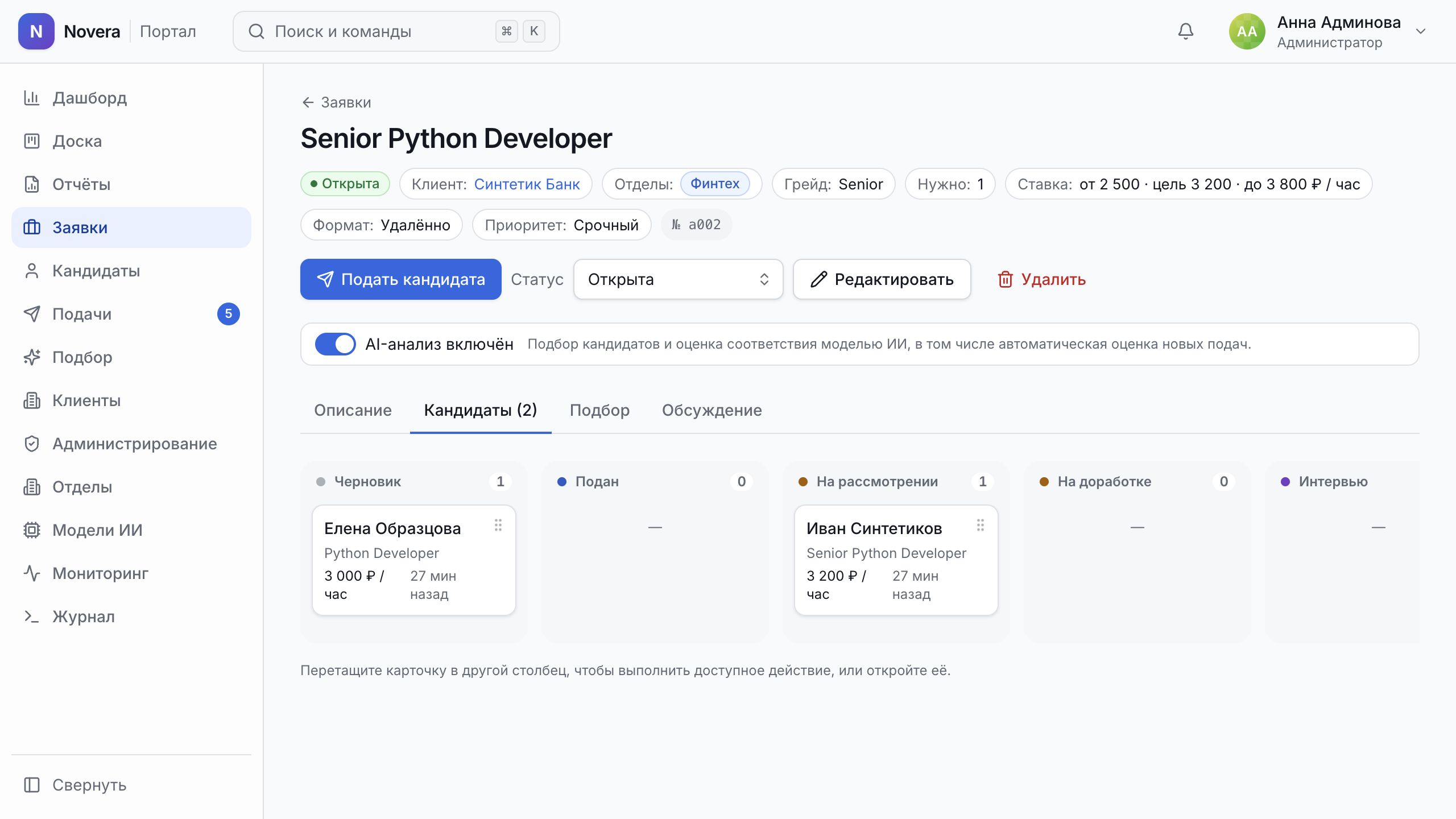
The TalentFlow AI page shows request and candidate review screens: where requirements, submissions and team decisions are kept.
If you use a ranking or match percentage, define how it is calculated. The result reflects the selected criteria, not the probability of someone succeeding on the project. A skill missing from a CV needs clarification; its absence does not prove that the person cannot do the work.
Agree how the engineer will join
A shortlist helps you choose whom to talk to next. Use the interview to explore relevant experience and problem-solving. After selection, agree availability, start date, responsibilities, time reporting and communication.
For a dedicated team, also define who plans work, reviews delivery and manages changes to the team. Commercial terms and day-to-day management should not remain unspoken expectations.